Client
Voltz
My role
Visual Design UI & UX Design UX Research
Industry
Fintech
Date
January 2023
The Problem
The challenge wasn't a single broken feature — it was a product that had grown without a clear design system or user-centered rationale.
Accessibility gaps
Color contrast failed to meet minimum readability standards, particularly in low-light conditions and on smaller screens.
Unclear hierarchy
The feature organization didn't reflect how users actually think about their finances, increasing cognitive load at every interaction.
No scalability foundation
The interface had no grid system or component logic, making it fragile and expensive to evolve as the product grew.
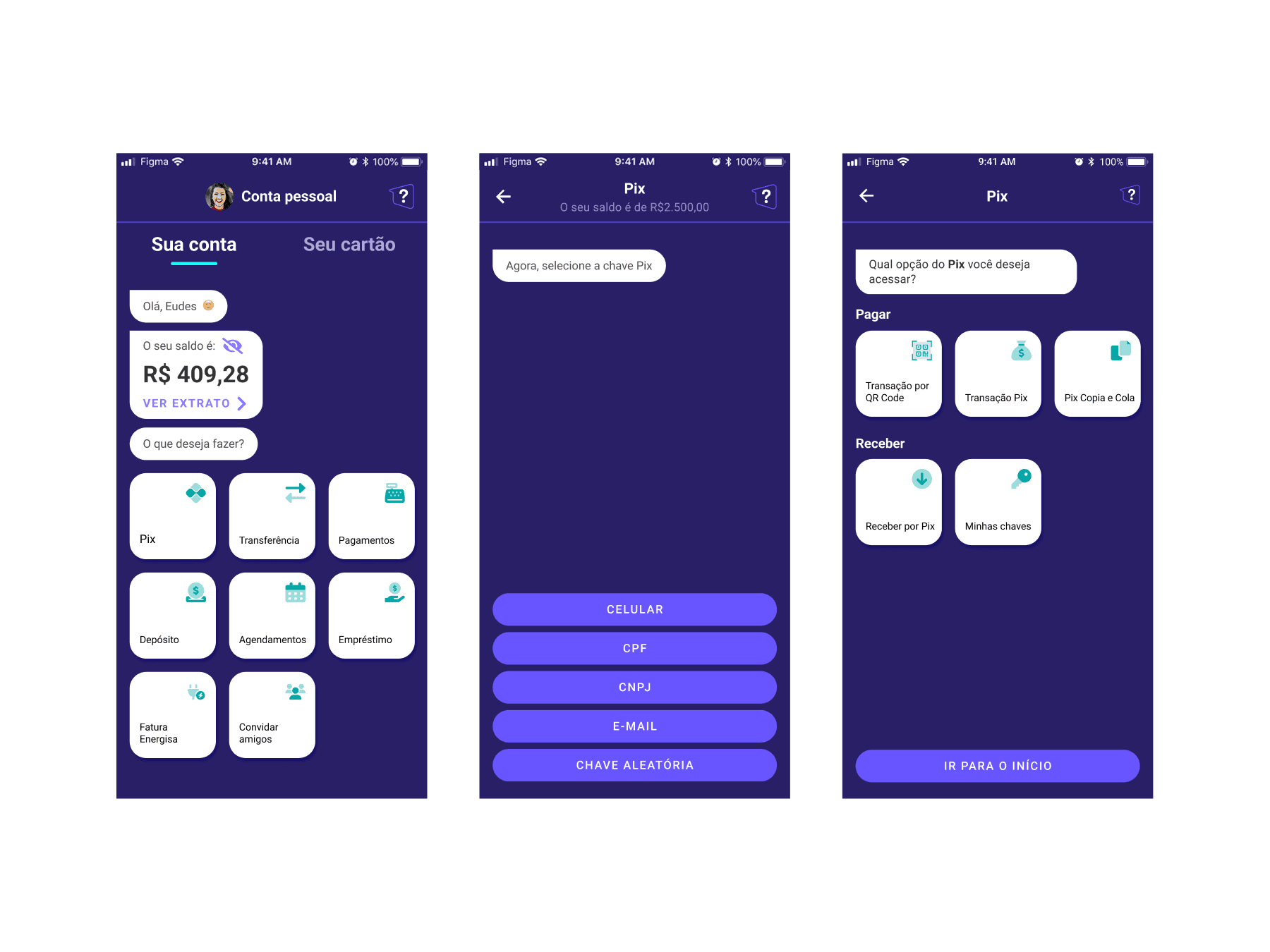
Before jumping to solutions, I needed to validate whether the problems identified in the heuristic analysis were actually felt by real users — or just design assumptions.
I ran an unmoderated usability test with 20+ participants, recruited from the app's actual user base and screened by demographic profile. The goal was to observe how users navigated key flows without any guidance — exposing friction points that a moderated setting would likely mask.
Three tasks were tested: checking balance, making a transfer, and accessing financial history. Simple actions that shouldn't require effort — and did.
Navigation complexity
Users struggled to locate key features on the first attempt.
Slow task completion
Simple actions averaged 35 seconds, well above expected.
The results revealed consistent patterns across participants: the problem wasn't that users didn't understand the app — it was that the interface was constantly forcing them to re-orient themselves.
I analyzed 8+ digital banking apps across three dimensions directly connected to the problems found in research:
navigation and information architecture, visual hierarchy, and financial data display.
The goal wasn't inspiration. It was evidence.
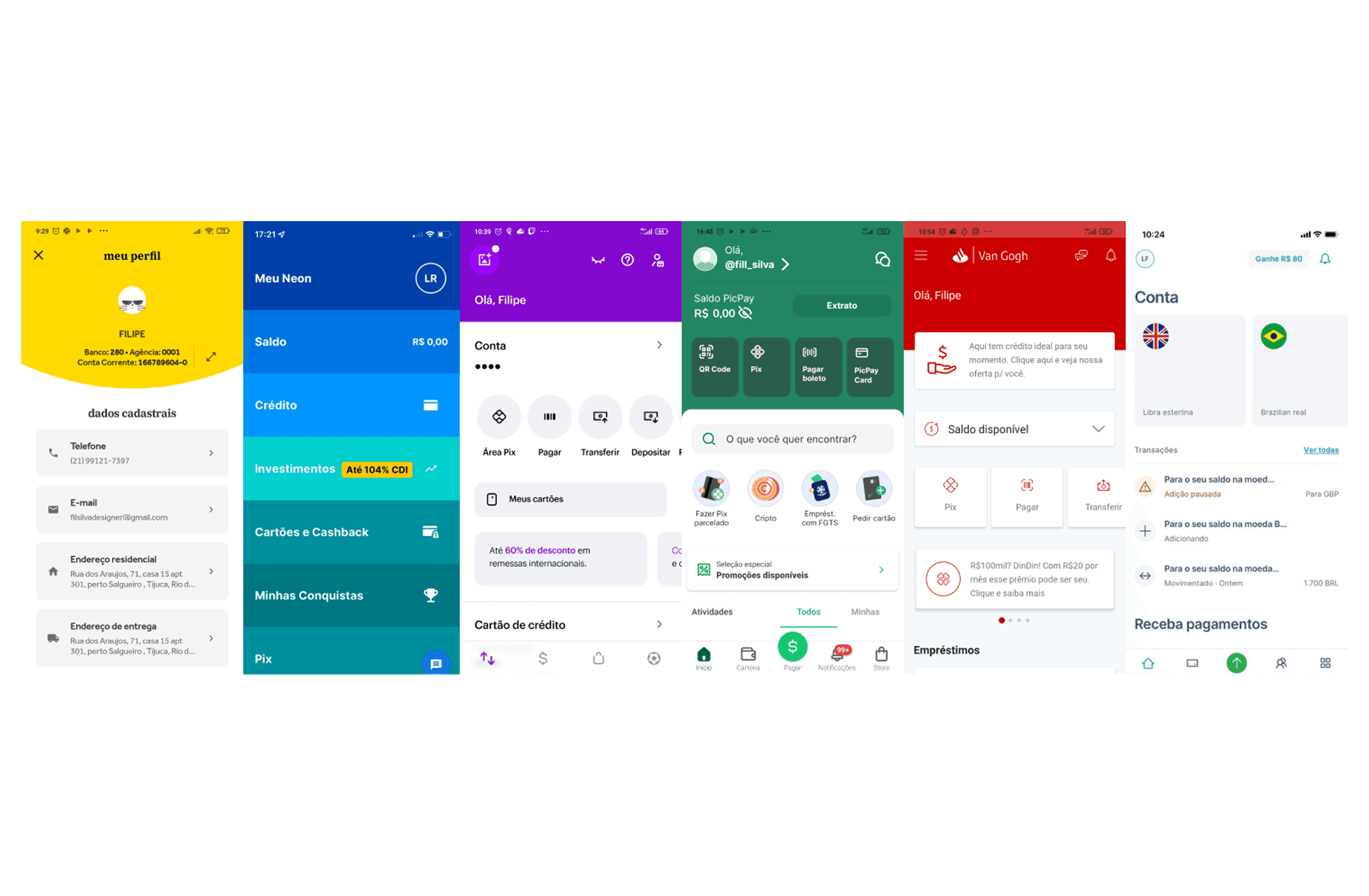
Three consistent patterns stood out among the better-performing experiences:
Progressive disclosure: Effective apps surfaced only what users needed at each moment — hiding complexity behind clear entry points.
Financial data as a hierarchy: Balance, transactions and actions treated as a layered system, each with distinct visual weight — not equal prominence.
Navigation anchored to user goals: Features organized around what users want to do, not around the product's internal logic.
These patterns directly shaped the redesign, particularly the restructuring of the home screen.
The design phase began with structure — not visuals. Before touching color or typography, I needed to solve the architectural problems causing friction.
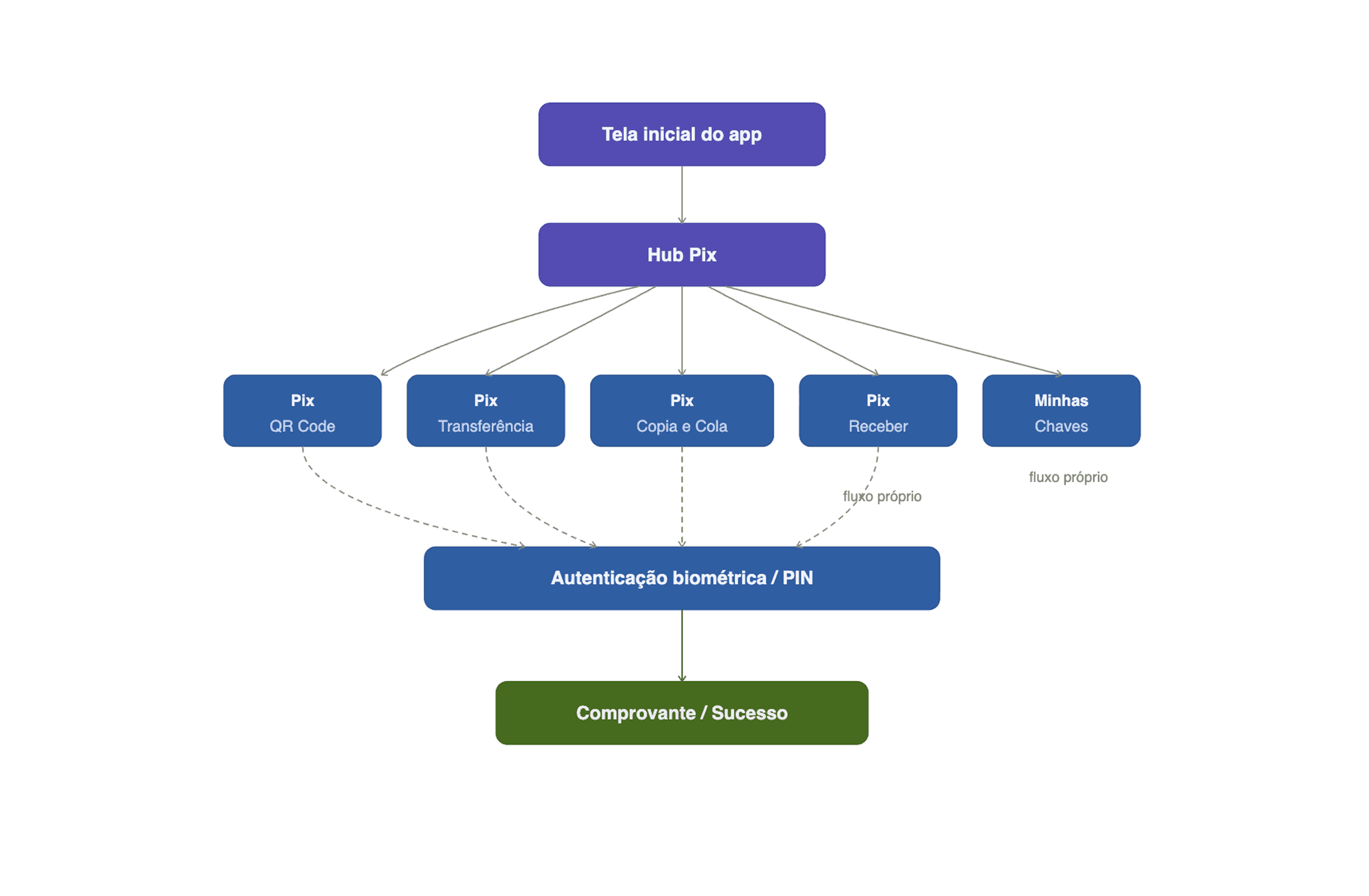
Navigation flows were redesigned to eliminate unnecessary steps. Features frequently accessed together were grouped into coherent clusters, reducing the mental effort required to move through the app.
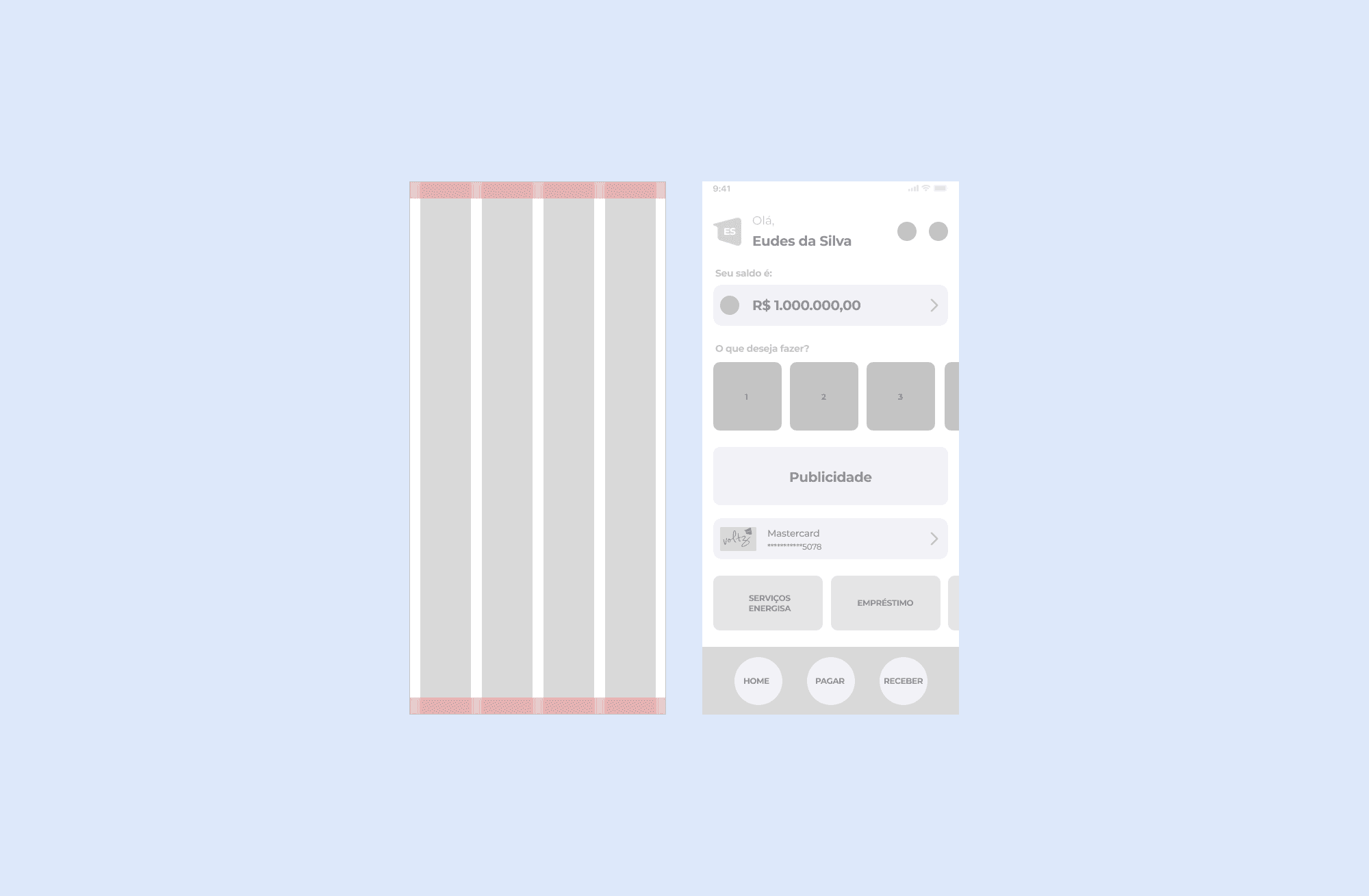
A grid system was introduced for the first time — not a cosmetic decision, but a structural one. A component library was established in parallel, ensuring consistency across every screen without rework.
Key flows were partially validated with users before moving to high fidelity — enough to confirm the direction and prevent late-stage rework.
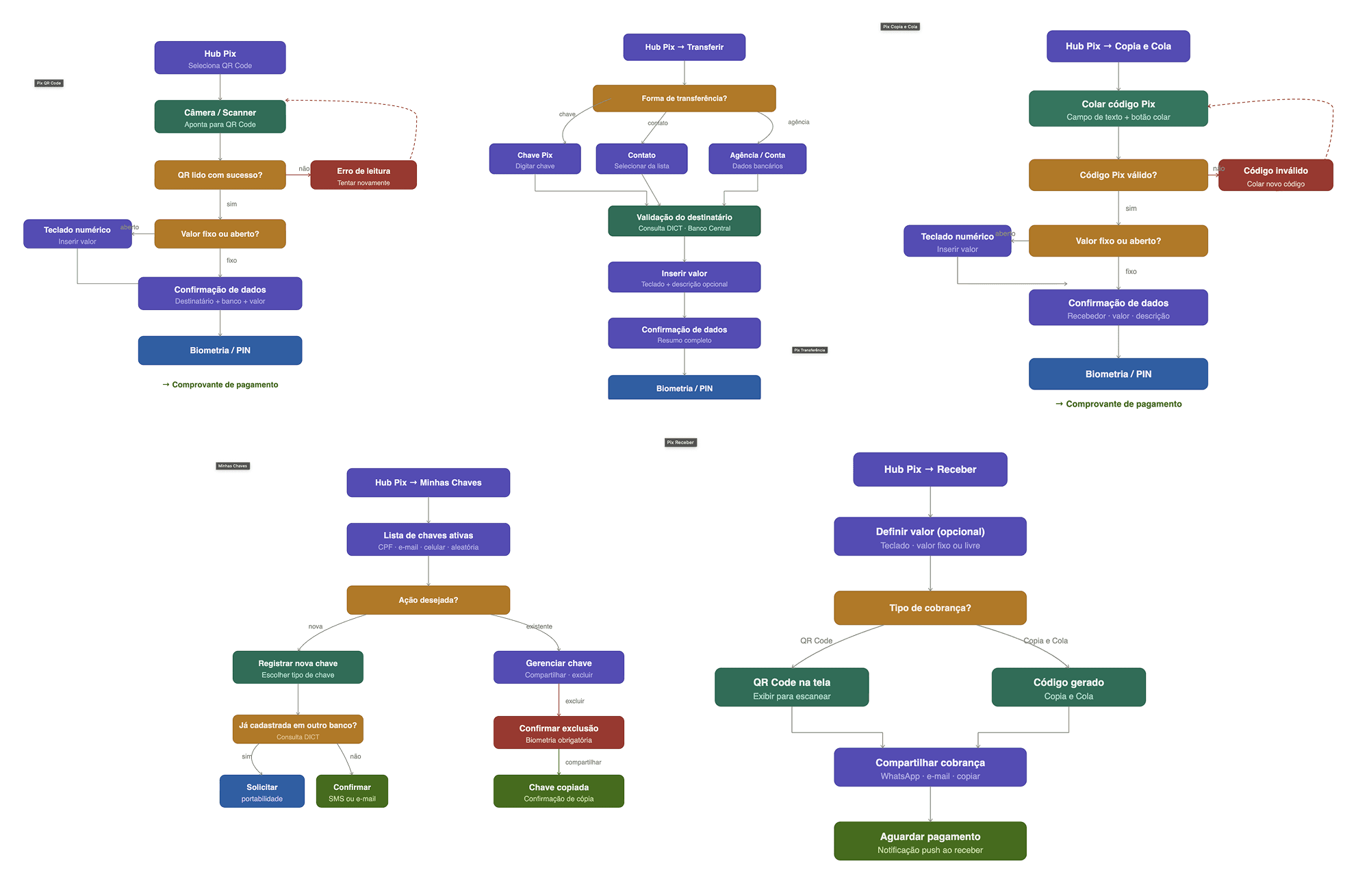
The updated flows eliminated intermediate screens, reduced decisions per step, and aligned navigation with the mental model users already had of how banking tasks should work.
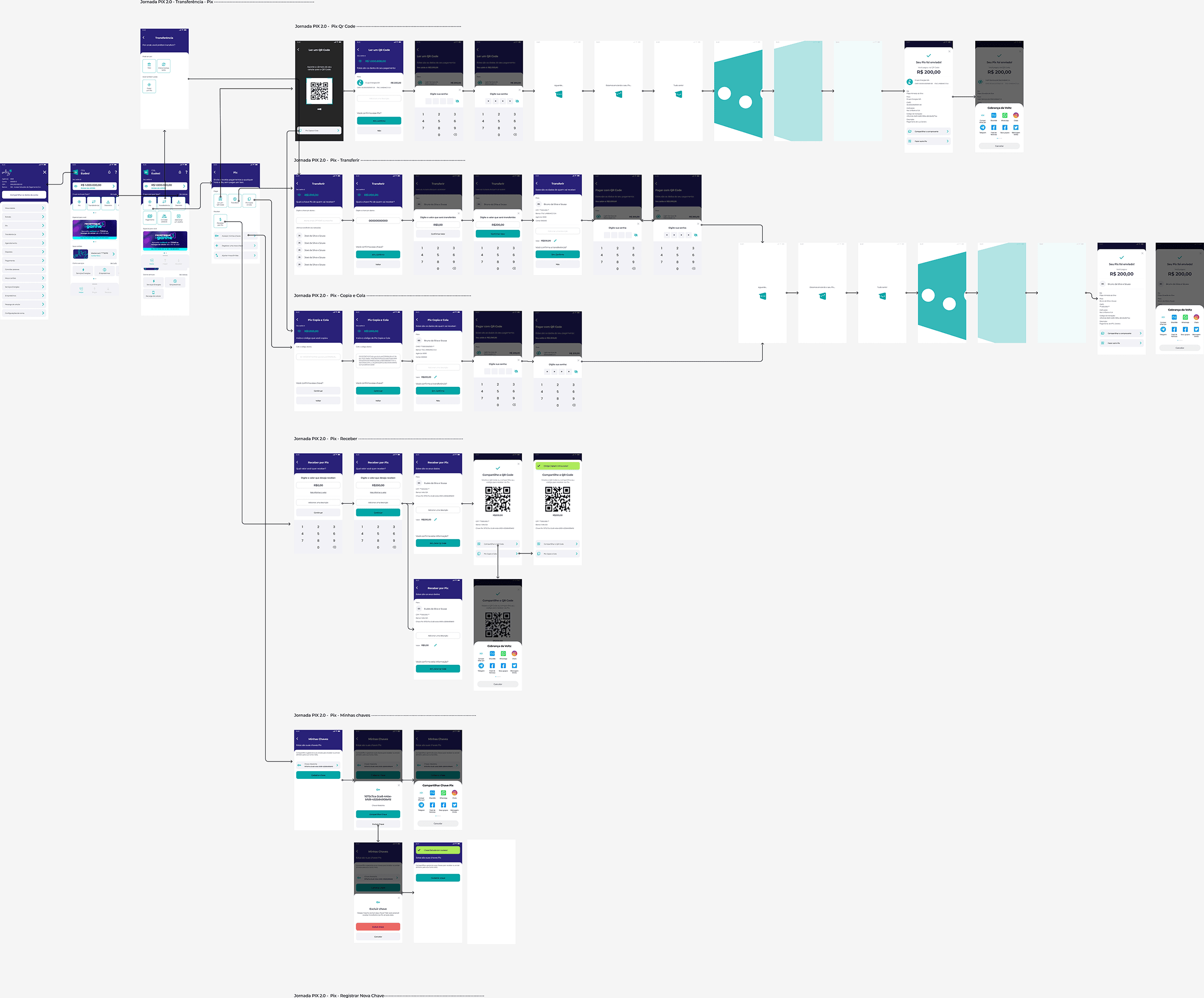
The final interface reflects every decision made throughout the process — from architecture to visual hierarchy.
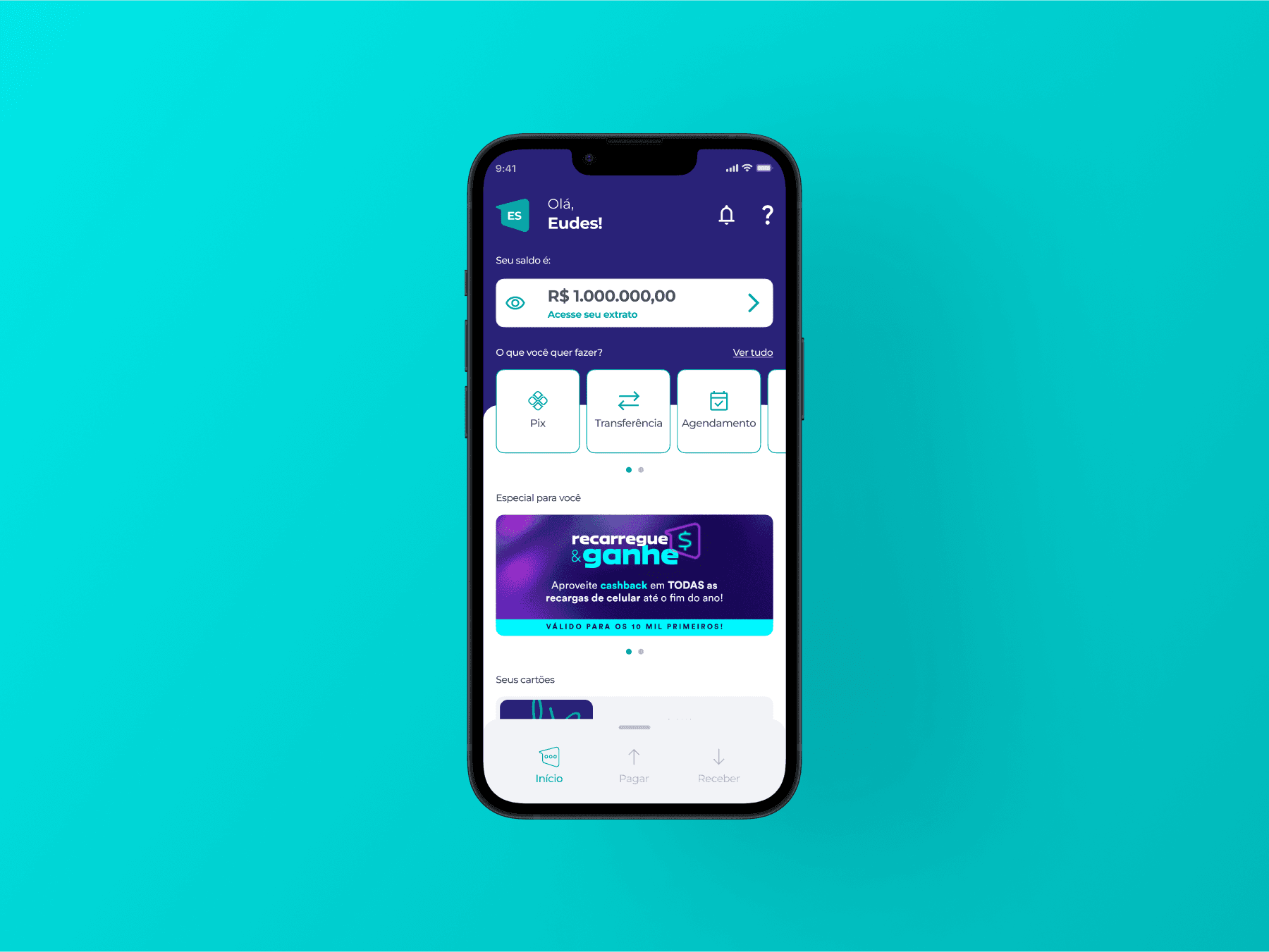
Balance as the primary element, quick actions in sequence, transaction history below. Users find what they came for without searching.
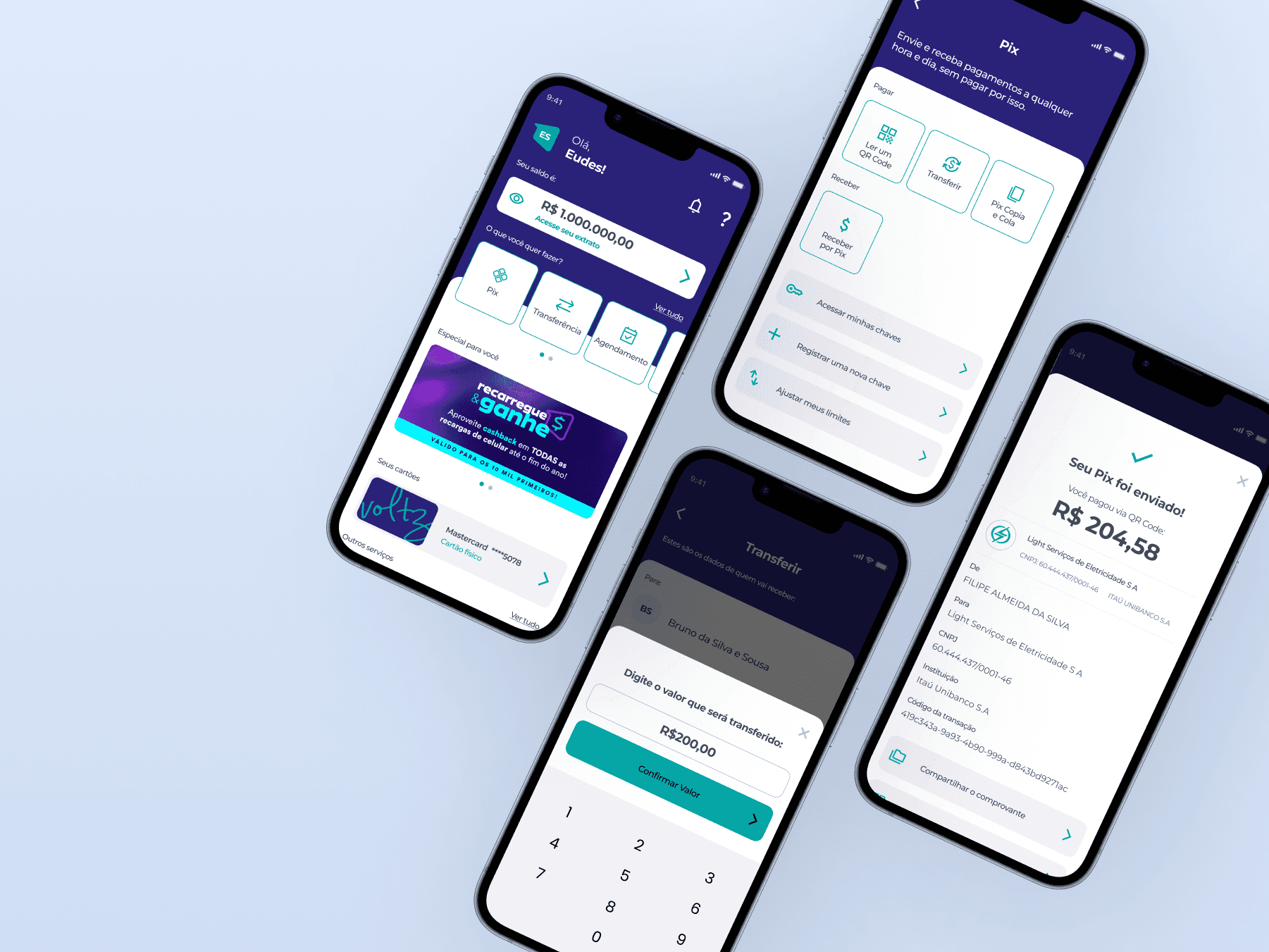
Common actions reachable in fewer steps, with a consistent pattern across all flows.
A defined grid, improved contrast and a consistent component library give the interface the coherence it previously lacked — and the flexibility to grow.
0%
0%
of users found the app more functional
representing a 21% improvement compared to the initial test.
These improvements validated that solving structural problems — not just visual ones — is what moves the needle.
• Usability problems are rarely about aesthetics. They're about structure — and the decisions made before the first pixel is placed. • By grounding every decision in research, the redesign addressed the actual sources of friction rather than their symptoms. The result was a more intuitive, more accessible, and more scalable product.